Do You Have to Love Your Body to Eat Normally?
Why improving your relationship with food doesn’t require body positivity
When people start noticing patterns in their relationship with food, one question often comes up:
Do I have to love my body for food to feel easier?
The short answer is no.
This idea can feel discouraging for a lot of people. Because if loving your body feels far away or even impossible, it can seem like you are stuck. But body image is not all or nothing.
In my nutrition counseling sessions, I see people move through different stages over time. It is less like a switch, and more like a spectrum.
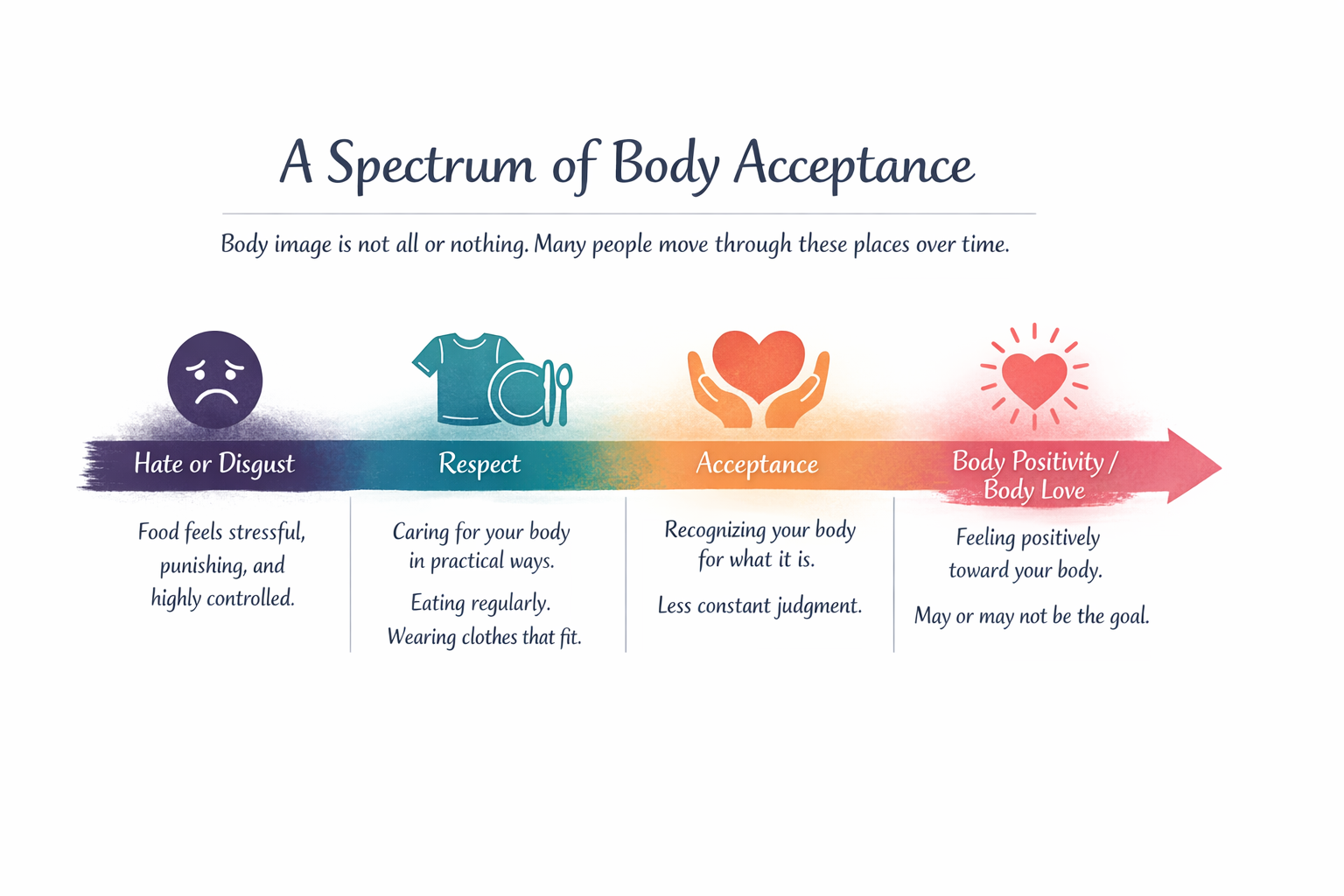
At one end, there can be a lot of dislike or discomfort in your body. Food may feel stressful, punishing, or highly controlled.
Further along, there is body respect. You may not feel positive about your body yet, but you begin to care for it in practical ways. Eating regularly. Wearing clothes that fit comfortably. Responding to your body’s needs.
For some people, this eventually grows into acceptance or even body love. But that is not a requirement for change.
Body respect is the part that often gets missed:
You do not need to love your body to start eating in a more steady, supportive way. In fact, many people begin improving their relationship with food before their body image fully shifts.
Because caring for your body is a skill, not a feeling.
You can:
Eat consistently even if you are frustrated with your body
Choose foods that satisfy you even if you are having a hard body image day
Support your energy even if your thoughts about your body are still loud
And over time, these actions can actually help soften body image.
What It Can Look Like to Eat Without Loving Your Body
A common misconception is that eating in a balanced, steady way comes from feeling good about your body. But for many people, it actually starts the other way around.
It can look like:
Eating meals consistently, even on days when you feel uncomfortable in your body
Letting yourself include foods you enjoy, even if a part of you questions it
Stopping when you are full, not as a way to control your body, but as a way to stay comfortable
Feeding yourself enough, even when your mind suggests you should do less
These choices are not about forcing positivity. They are about practicing care. And that can feel very different.
Care is often quieter than body love. It is less about how you feel about your body, and more about how you respond to it.
Believing you need to love your body, can unintentionally keep you stuck
Because on hard body image days, it can feel like you have failed before you even begin. But when the goal shifts to care, there is more room to stay consistent.
You can have a difficult body image day and still:
Eat breakfast
Pack a lunch
Sit down for dinner
Have a snack when you are hungry
And those moments matter. They are what help your body feel safer, more regulated, and more supported over time.
A First Step in Caring for Your Body
If loving your body feels far away, you do not need to start there. You might start with a simpler question:
“What would it look like to take care of my body today?”
The answer does not have to be perfect.
It might be:
Eating something instead of skipping
Adding a snack in the afternoon
Choosing a meal that sounds satisfying
Letting yourself eat without overanalyzing every decision
Small, consistent acts of care often create more change than trying to force a different feeling about your body. Treating your body with respect is an important part of learning to eat “normally” again and improving your relationship with food.
Ready to Feel More Steady Around Food?
If you’re struggling with body image, food guilt, or feeling stuck in stressful eating patterns, you don’t have to figure it out alone.
In my nutrition counseling sessions, I help clients build a more consistent, supportive relationship with food and their body.
You can start learning how to:
Eat more regularly without overthinking food
Feel less guilt around eating
Respond to your body with care instead of control
Improve your relationship with food in a way that feels supportive and sustainable
If you’re ready for support, you can schedule a nutrition counseling session here.
Not ready for 1:1 counseling yet?
Download my free guide: Why Food Feels So Hard